Awnings and Snow
Aluminum Awnings With Maximum Snow Load
Can I use an aluminum awning in snow country? Yes you can. Just build them a little stronger than those of us lucky enough not to have snow.
Here are some of the factors to consider with awnings and snow.
Panel gauge
I - beams
Gutter system
Post spacing
Thicker gauges of aluminum are required for snow areas. Aluminum awnings are rated with a lbs per foot snow load. There are several factors that are used to determine this figure. Most importantly are the gauge of the awning panel and the tributary distance. The tributary distance is the space between points of attachment, such as the hanger and an I-beam and the beam to the gutter. These would both be tributary distances. Other factors used in the engineering would be the size of the I - beam, if used, and the type and spacing of the posts. Posts spaced closer together add to the overall snow load.
Engineering plans are full of charts and diagrams. Every wind and snow load spec has columns of options that all have to be met to achieve a certain rating. An example would be to achieve a 90 mph wind and a 40lb. live load with an 8' tributary length you would need .025 gauge panels and 3" aluminum posts spaced at 8', or scroll columns spaced at 6'. This is if an extruded gutter is used, if you are using roll form a new set of figures would apply.
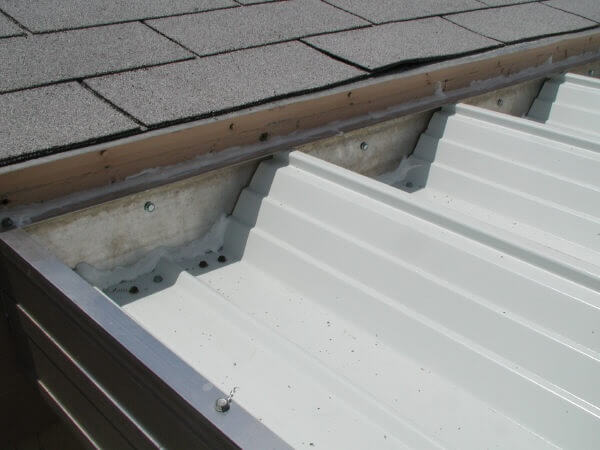
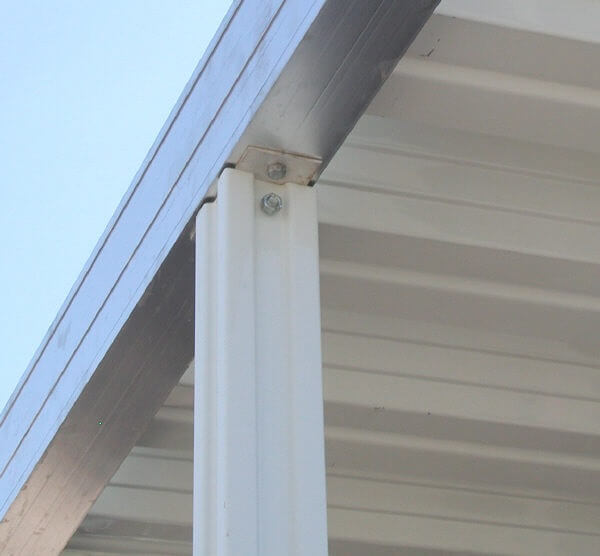
Another important factor to consider is the gutter. When we install awnings in the snowy parts of Arizona we turn the gutter upside down so it will not cause the snow to back up and sit on the awning any longer than necessary. Our high country's are also full of pine trees that would continually clog a gutter so this method just seems to work better. An I-beam could just as easily be used in place of an upside down gutter. This page shows a typical aluminum awning installed in snow country.
Another thing we have found helpful is to give the awning as much slope as possible. In areas without snow 1/2" per foot is normal. The more this can be increased the better. Follow this advice and you can easily build an aluminum awning that will holdup to all the snow you can give it. Feel free to contact me for any further advice about aluminum awnings or awnings and snow.
Additional Awning Parts | Patio Shade | How to Build Wood Awnings
Versa Tube Shelter | Dangers of Shade | Aluminum Awnings
Awning Plans | Do-It-Yourself Patio Covers | Awning Installation
Aluminum Awnings and Window Awnings | Awning Contractors
Patio Awning | Arizona Awning Quote

Awnings
Alumawood Patio Covers
Patio Covers
Awnings
Carport Cover
Mobile Home Awnings
Portable Awnings
Shade Projects
Do It Yourself
Window Shade
Deck Shade
Pet Shade
Shade Screens
Pools
Site Info
Contractors
Contact
Site Map
Shade Shop


