Diamond Star Above Ground Pool
Installing An Oval Pool
This page
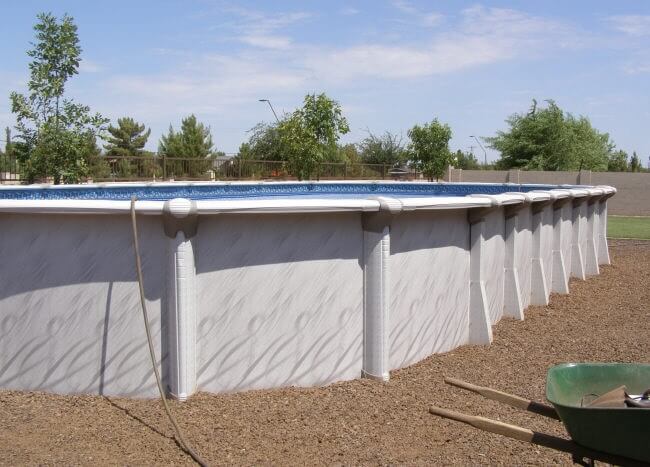
discusses the installation of a 21' x 43' Diamond Star Above
Ground Pool by Wilbur International. Wilbur International makes pools
under many different names like Sharkline, Voque, Atlantic and Seaspray.
In the early days of using resin to make above ground pool parts some
of the Wilbur companies completely overdid it. The parts were
so poorly designed, and over designed, they were a real pain to
assemble. Resin sleeves for the bottoms of the uprights that
were supposed to just snap into place but never did are just one of
the many not so good ideas we had to deal with.
This
pool, while still using resin, finally got it right. The decoration pieces
for the top connector covers snap into place very easily. The
resin rails actually stay in the resin footplates in a snug, yet
manageable, fashion. It is a nice looking pool without the excessive
use of little decoration pieces that have no purpose and are a pain
to install.
My only complaint with the Diamond Star above ground pool, as with most Wilbur
pools, is the lack of quality screws used in the installation.
Steel screws that would stick to the magnets in our drill tips would
be nice. Screws that would go into place without stripping out
half the time. I've never been a fan of cheap aluminum screws
where a good third of them wind up on the ground because they
stripped out before they were tight and had to be removed with vice
grips.
With that
said, let's install a 21' x 43' oval Diamond Star Above
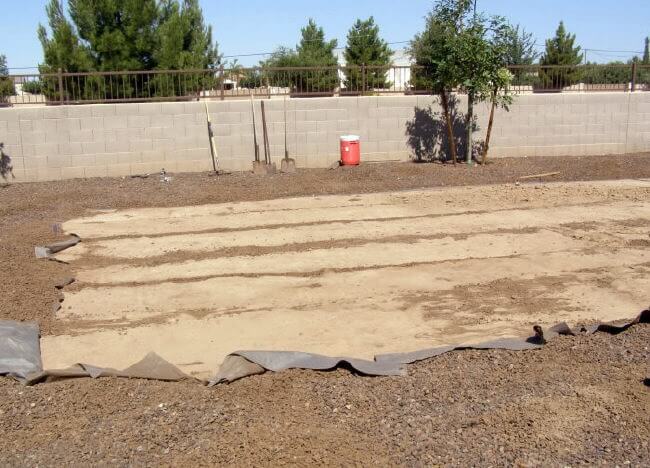
Ground Pool. This yard had rock landscaping that needed to be
removed. When the rock was moved the ground was then leveled.
All the images on this page can be clicked for a larger view.
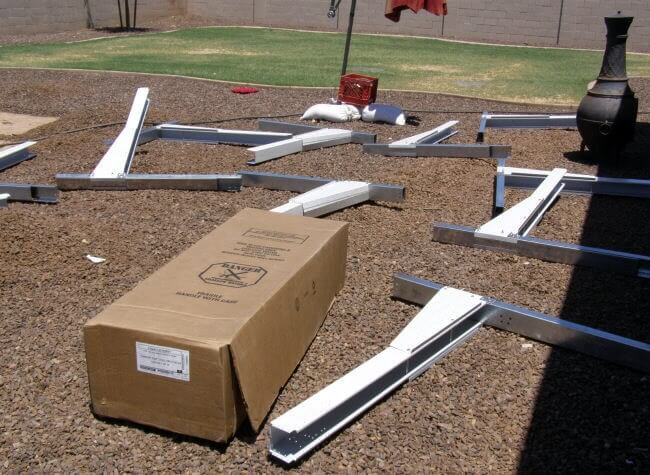
Unpacking
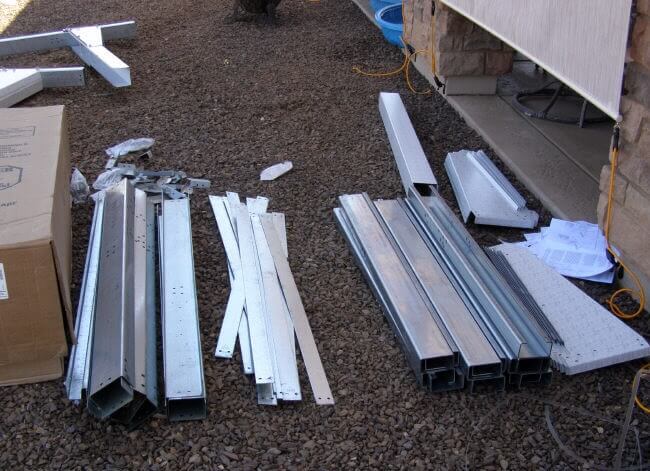
and sorting pool parts is the next job. This pool
comes packed in many boxes and it should all be laid out and sorted,
this gives you a good idea what you have to work with. It's
also an excellent time to find out if you are missing anything.
The
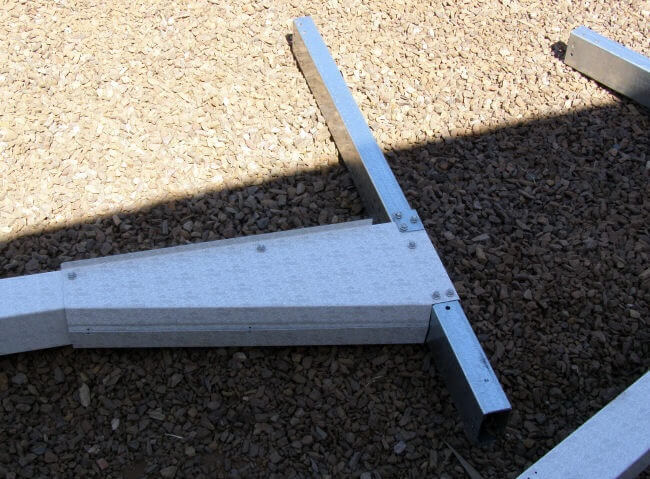
brace assemblies are the first things to be built. It is
important to follow the instructions very closely when putting these
together. There are little gusset plates that have to go on
each side, and yes, they are important. The instructions will
also tell you the bolts going into the uprights are shorter than the
ones going through the channel assembly. These shorter bolts
are not packed in the same boxes as the brace parts and other nuts
and bolts but if you don't use them you will run out of longer bolts
before the braces are finished.

It
was nice to see how easily all these pieces went together.
They are heavy and awkward but the machining for the bolt holes was
perfect. It is no fun having to re-bore every hole before a
bolt will go through five or more pieces of metal. That's the
case with some brace assemblies, but not with these. Every
hole was machined perfect and the bolts went through easily, with
only a slight tap of the hammer on occasion. Notice how we
have laid all the assemblies on their sides when they are completed.
When they are standing up the slightest breeze can knock them over.
This can cause scratches on the uprights and torn skin if they
happen to land on you.
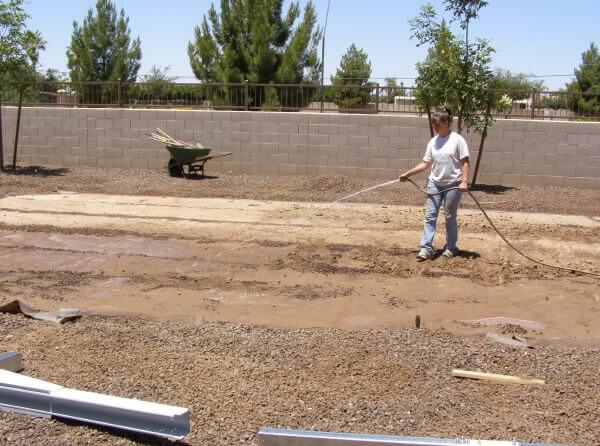
Soaking the
ground a day or two in advance of digging the brace
trenches can be a big help. Damp soil digs easier and also
packs in better around the braces once they are set in place.
When I set up a pool job I also ask my customer to water the pool
area a couple days in advance of our arrival, unless they have
desert landscape. When rocks need to be moved I would prefer
doing that first, and then watering the ground, if needed.
Before
any digging is done the braces for the entire side are set in
place. We connect them all with the bottom tracks and set them
against a string to keep them all inline. Using a string on
one side assures that when you are finished your pool sides will be
straight. When the side is set just the way we want it we mark
where each trench will be. Each brace then gets moves aside
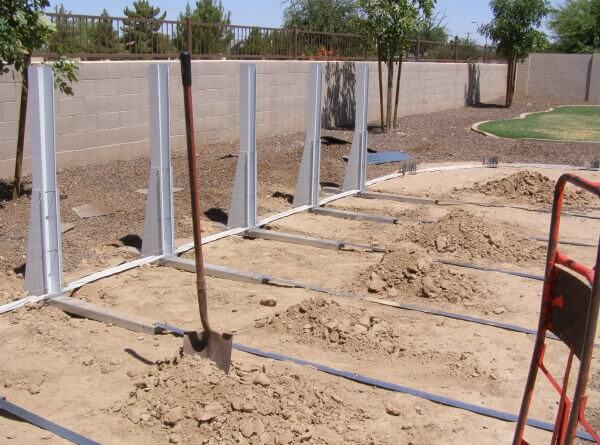
while the digging is done. These trenches measured 2 1/4", the
thickness of the assembled bottom channel. The rear section of
each trench is dug deeper for the 4" thick block to sit in.
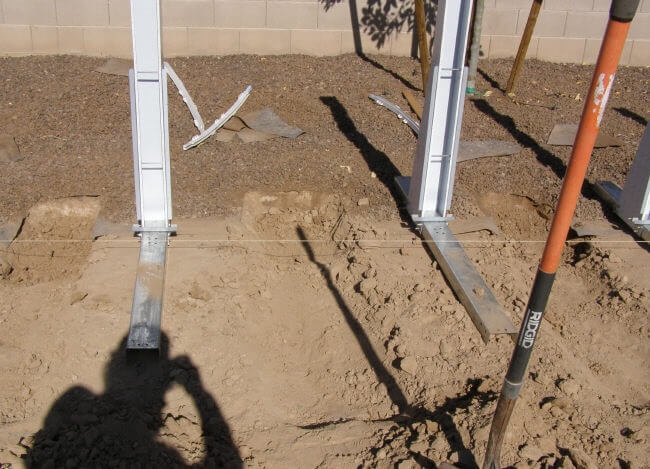
These
are the finished trenches. We use a laser level at this
stage so that when the block and brace is set into place only minor
leveling is needed, if any. When the trench and block are
properly leveled the brace can be set into place and your reading
will be the same at the front of the channel and the rear.
Every channel is level front and rear. On this pool that means
fourteen brace assemblies all perfectly level and all sitting on
blocks.
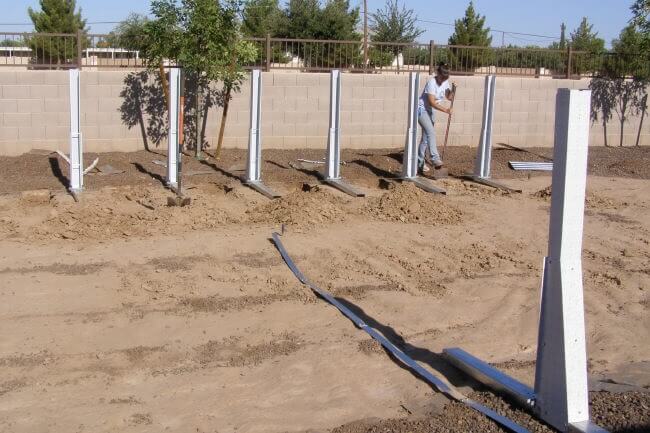
The braces
on this side have been set back into the trenches, the
level checked, the tracks back into place and we are ready to lay
out the other side. It is critical that you lay the opposite
side out square with your first side.
In order to
square one side off the other you need to run a tape
measure from the end post on one side to the opposite end post on
the other side. You then go to the other ends and measure
again, these measurements need to be the same. If not the side you
are about to dig needs moved one direction or the other to get the
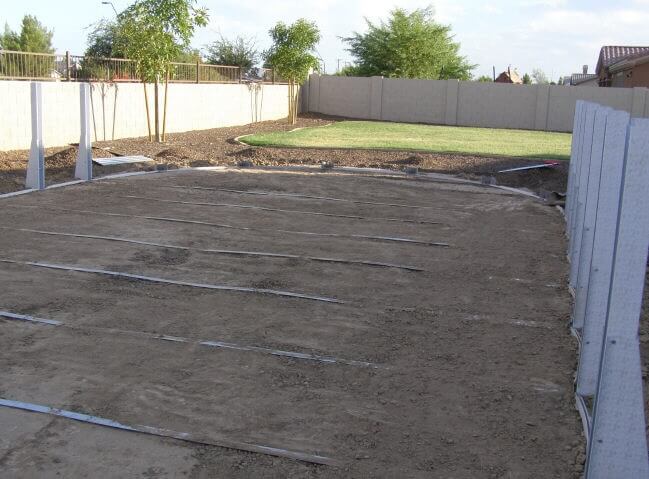
measurements the same. This photo shows both sides of the
braces set and backfilled.
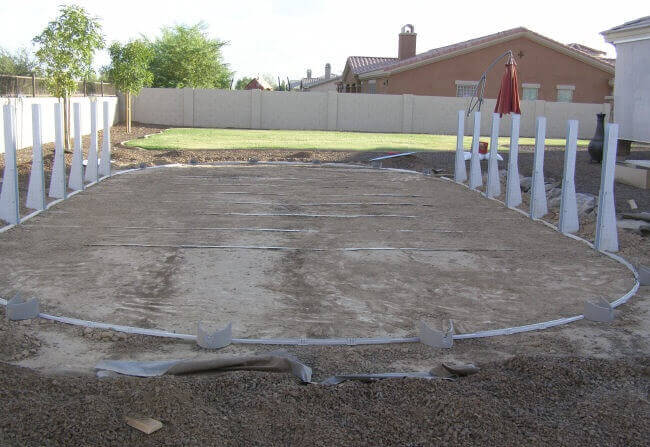
Once the sides
are set the end rails get laid out and connected to
the footplates. Each of these plates are laser leveled to
match the level of the side braces. The ground between the
footplates is leveled also so there are no dips or high spots under
the pool bottom rails. We now have all the braces set, the end
rails set, and all the ground in the pool area level and raked
smooth.
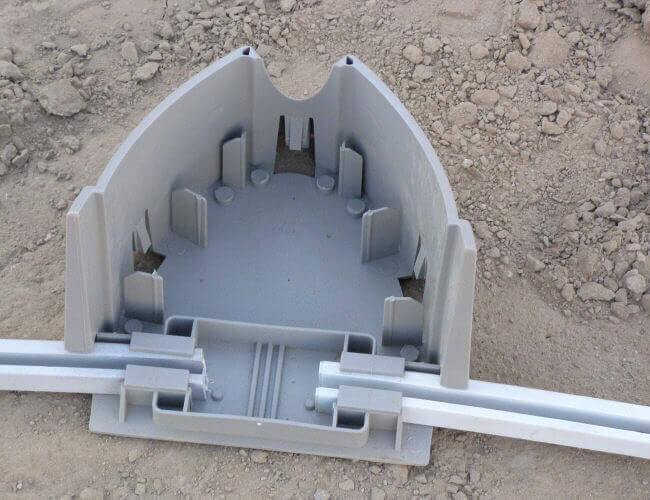
This footplate close up shows how the bottom rails are pushed in and
up against the stops. The distance between the bottom rails
and the stops is called the "gap" I talk a lot about. While
the instructions usually talk very little about it, all pools have a
gap between the bottom rails and the stops. The instructions
for this pool just says this is the place for adjustment to make the
wall fit properly but they do not tell you to actually set a gap.
The pool bottom rail gap is always a guessing game but the key point
is the gap should be the same on all the footplates. That
means if you unroll the wall, and have several inches too much, you
should roll it back up and make the gap larger on all the
footplates, not just the last one. On this pool I set the side
bottom rails into place fairly loose and used a very small gap at
the ends. I wound up with less than an inch of extra wall that
I could easily make up by adjusting the gap on only one end of the
pool.
Follow the link to see the rest of this
Diamond Star Above Ground Pool Installation.
Check here for our Arizona installation prices.
Find more photos and installation tips on some of my other Pages.
Oval Pool Installation
Atlantic Above Ground Pool
Oval Pool Deep Ends
Quest Oval Pool Installation
LX Oval Pool Review
Above Ground Swimming Pool Installation
Aqua Leader Installation
top of Diamond Star Above Ground Pool