Resin Above Ground Pool
Resin Or Steel
Will your next pool be one of the newest resin above ground pools pools?
Read this page first before you make that major purchase. I do not have a definite yes, buy a resin pool, nor do I have a definite no. I do, however, have my own thoughts as well as those of others to share with you. From there you will have to make up your own mind.
Having installed just about every make and model of above ground pool ever sold, if I were to buy a new pool tomorrow, it would be an all steel pool. Here are a few of the pros and cons as seen by others.
"I was just told by a pool salesman to avoid a resin top rail here in Colorado because the sun will bake it and make it crack." I would have to second that opinion having seen the Arizona sun do the same thing.
"I had a salesman tell me to never order anything resin because we are in the north and it would crack with the first freeze or in the spring if the ground shifts at all." I am not at all familiar with freezing weather conditions on resin above ground pools but I do know that resin pool parts have very little give. A metal top rail will bend or become dented and can easily be straightened back into shape. Resin rails may be stronger in some ways but they do not bend, they snap into two pieces. I have seen the resin connector cover caps do that many times simply because they were too cold to bend a little.
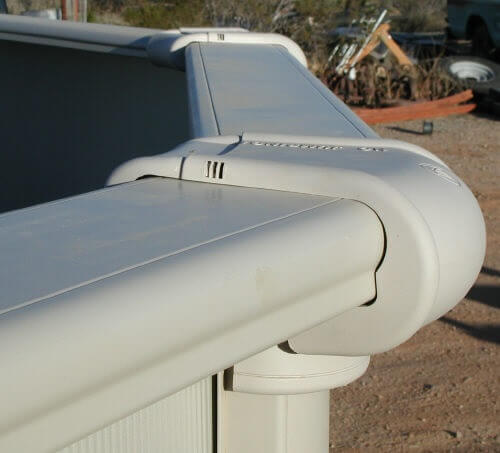
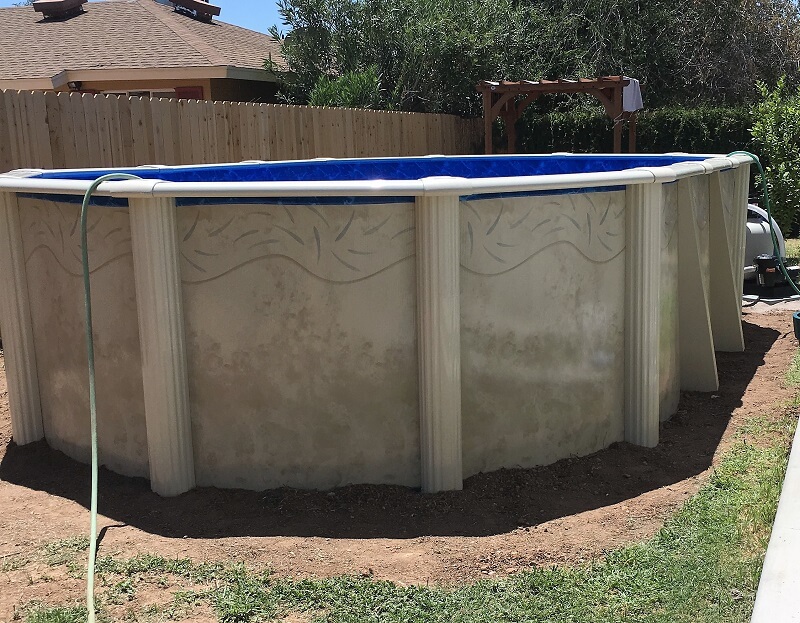
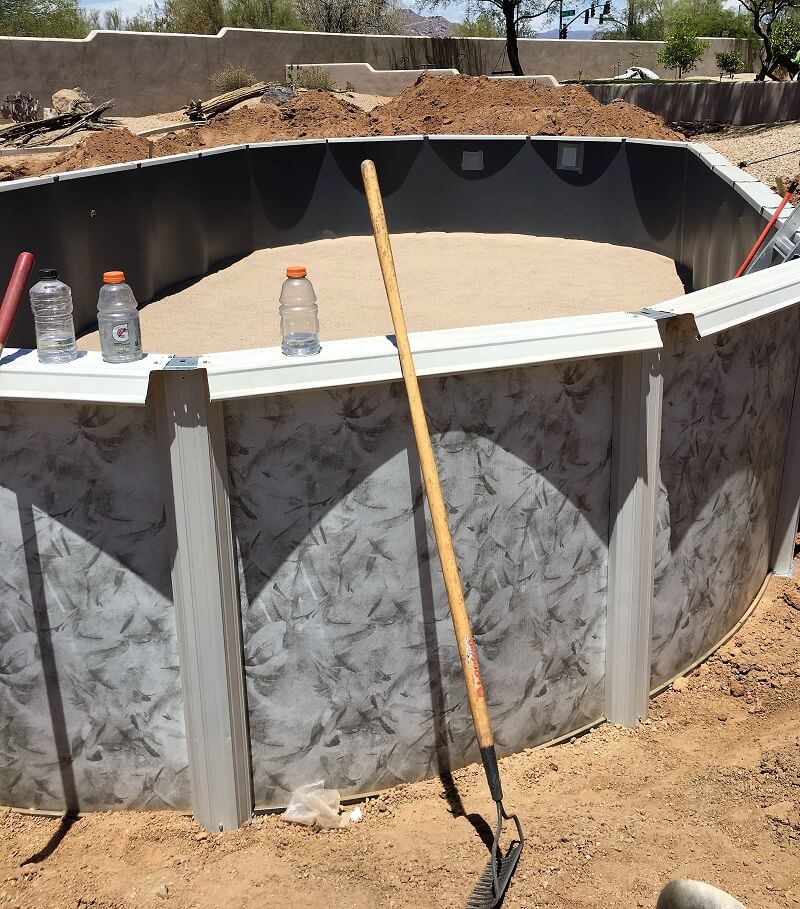
The one thing about resin above ground pools pools that bothers me the most are the top rails. The top rail attaches to the upright plates with four screws. The screw holes are near the ends of the rails. There is maybe a half an inch of thin resin from the screw hole to the end of the rail. Any amount of outward pressure on the rail screws will cause the resin to tear and the rail to come loose.
A round pool installed, perfectly round and perfectly level, should never have outward pressure on the top rails. On a perfectly installed pool, you should be able to remove all of the top rails and uprights, with the pool full of water. I have seen many do-it-yourself installed pools that I would not take one rail off of without draining the pool first.
The outward pressure on the top rails is most noticeable on the corners of an oval pool. If the side braces settle just a little bit pressure is applied to the top rail and resin rails will simply let go and separate from the top connector plate. That has happened on a couple of my own installs and it scares me more than just a little.
I suppose to be fair I have to add a positive comment about resin above ground pools, so here it is.
"My pool is 2 years old, my resin uprights and top plates are as nice as the day they were bought, there is NO sign of any UV damage such as drying flaking etc. If they all rot out down the road, replacing them will cost me 0 dollars because they take about 2 minutes to remove (for 1 top rail and 1 upright) and I can replace them without needing to do more than releasing one bolt per set." The last part of this quote is referring to the warranties not covering labor. If you are handy with tools and the uprights are not buried in the ground, or the top rails covered by a deck, changing them should be easy.
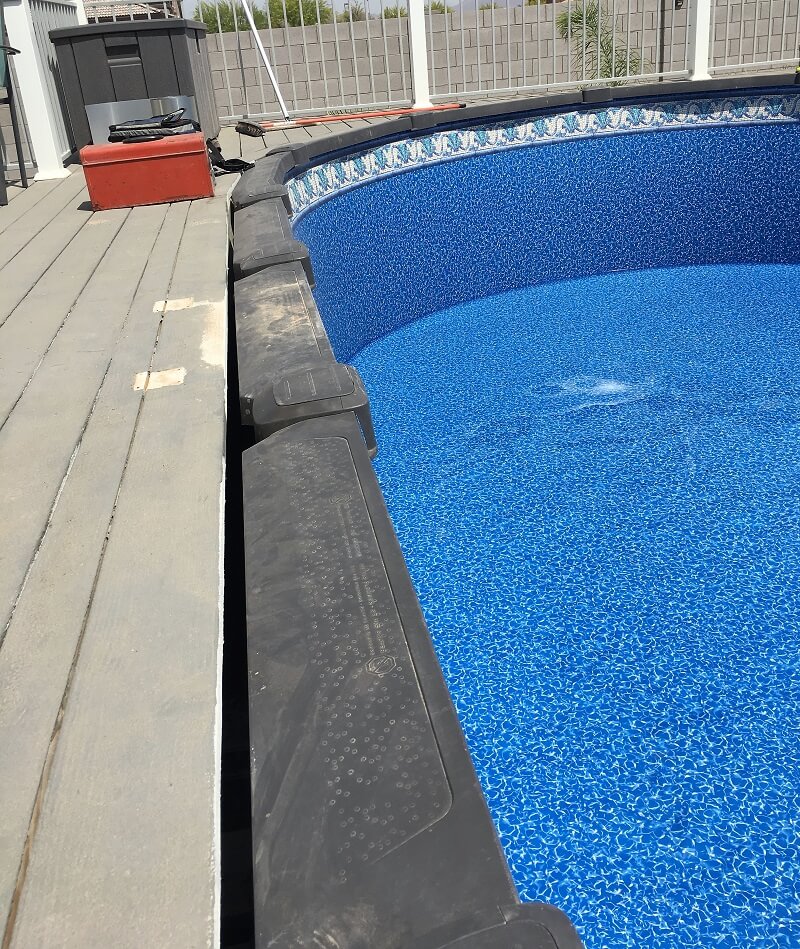
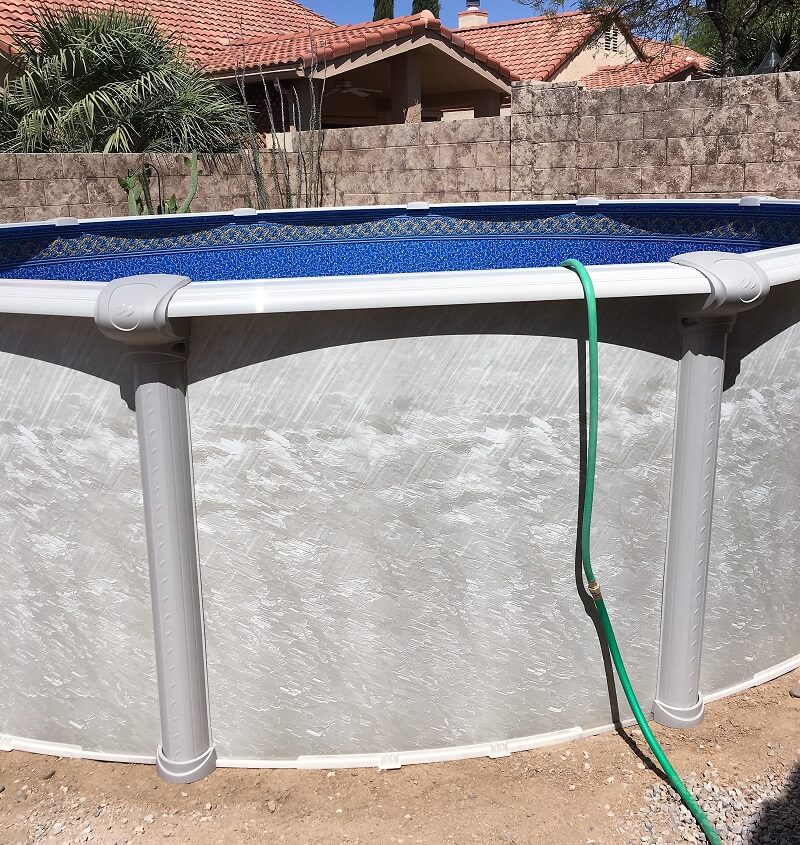
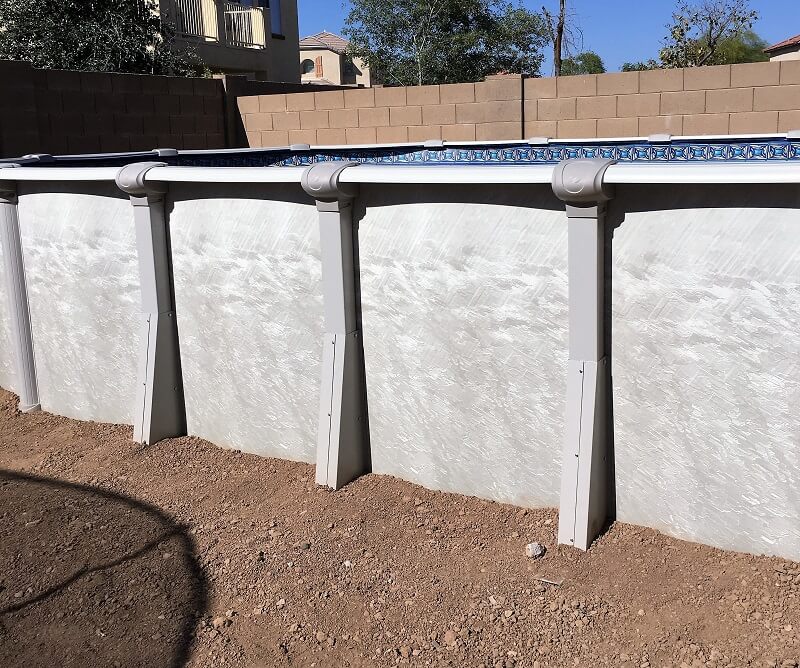
Check here for our Arizona installation prices.

Every Pool Owner Needs This
Hire The Pool Pro
Private Counsel
My E-books and Kindle Books

Do It Yourself
Pool Installation
Overlap Liners
Expandable Liners
Beaded Liners
Oval Pools
Best Pool Buys
Ask The Pro
General Pool
Pool Parts
Pool Base
Pool Filters
Pool Liners
Pool Installation
More AGP Help
AGP Help Center
Pool Questions
With Answers
Everything Else
Above Ground Pool


