Above Ground Pool In Ground
Things To Consider Before You Dig
I am often asked "Can I put an above ground pool in ground?" Yes, this can be done. Over the years I have done it hundreds of times. Will it void my warranty? In most cases yes. My thought on the warranty is quite simple.
First of all we are just talking about the wall itself. Only a few times in 50 years have I seen anyone get a wall replaced under warranty. It is usually over 5 years before they begin to rust and by then the prorated cost for the wall is too much to bother with. Secondly, The pool becomes much stronger when the dirt is packed in around it. After a few years the wall could rust away, not that it would, and you would still have solid dirt holding the water and liner in place. There are many advantages to putting an above ground pool in ground and only a couple of disadvantages.
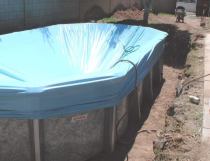
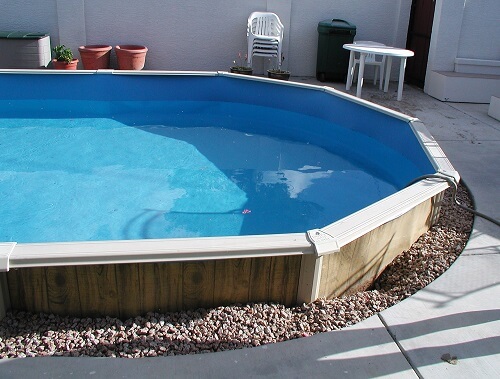
The photo above shows a pool with landscape rock around it. It looks nice but not good for liner changing time. All the rock would need to be removed before the pool could be emptied. Once the rock starts slipping down behind the wall you have major problems.
Doughboy has come up with a solution to the warranty and the cave in issues. If you follow their instructions you will not void your warranty and your pool will not cave in. The Doughboy solution involves digging a hole just slightly bigger than the pool. When the pool is complete the hole is backfilled with some sort of slurry solution that sets hard and will not rust the wall. The idea sounds good to me, just one problem. I cannot do a decent job of installing a pool if I cannot walk around the outside while installing it. I need between 2' - 3' of working room to correctly install the pool. This much backfill would require so much of the slurry as to be cost prohibitive. The photo below show a hole a little bigger than needed but made for an easy installation.
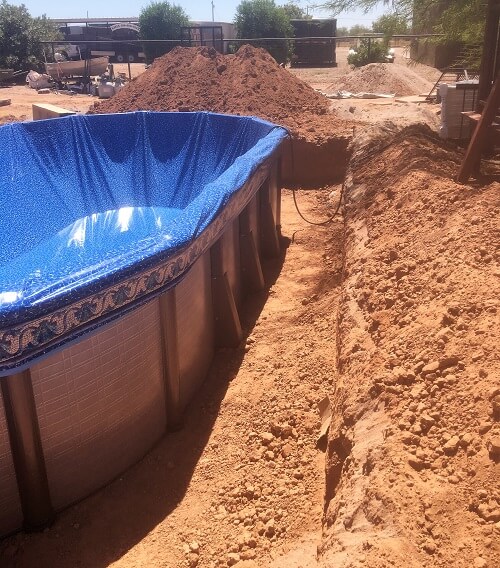
With that said, here is how I build an above ground pool in ground. The hole comes first of course. If the pool I am building is an 18' round pool I would want the hole dug 24' round. I always ask for 3' space around the outside of the pool. I used to ask for 2' and was lucky if I got 1'. Now I ask for 3' and maybe get 2'. The hole may start out at the top the right size but never when they reach the bottom. Once the hole is done it is time to build the pool.
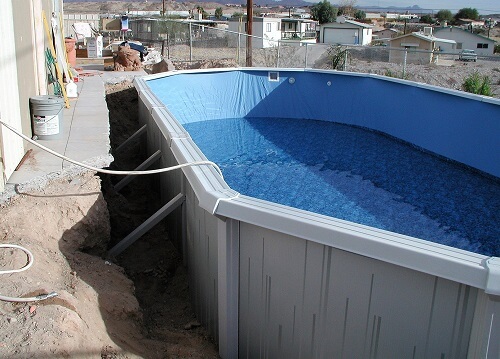
The photo above shows a pool that was a tight squeeze, not fun at all. Be sure to plan for enough room to set the side braces on an oval pool.
You can see some photos and how to instructions for installing an above ground swimming pool here. This will be a short recap since nothing is different when installing an above ground pool in ground as it is above ground. Make sure your entire area is level. Use a transit for this, it will make the whole job so much easier. I would level, rake and smooth the entire area and then lay out the track and connectors. When connecting the bottom tracks be sure to use a tape measure with a radius from dead center. Now I go back and level each individual connector plate. The two most important things with building an above ground pool are make it perfectly round and perfectly level.
If you are using sand for the base, now is the time to bring it in and pile it in the middle of the pool. Do not spread it out until the wall is up. It is very difficult to install a pool on sand and that is the most frequent mistake people make. As you install the wall make sure you install some pool structure as you go. This can be the pool rods or the uprights and top rails. I use both depending on the pool and liner. You need a structure to hold the pool up and a structure to stretch the liner over when you install it. Nothing is more discouraging than to have the pool wall unrolled all the way around and have a small breeze come along and blow it down. That's why we install the structure at the same time as the wall.
Next you will spread out the sand, smooth the sand and get out of the pool. The liner should be installed from the outside of the pool. This is the only way to keep the footprints out. By the time the pool is full the weight of the water packs the sand into place. When the liner is set and the uprights and top rails are in place just sit back and let it fill. When the water is just below the skimmer and return openings, and everything looks good, go ahead and install them. To really top off an above ground pool in ground check the steps at the bottom of this deck ladder page.
I would not start the backfill until the pool is full and always be sure to have the water higher than the dirt. I have seen many people paint the outside of the pool with roofing tar before backfilling. If you have the type of soil that might rust the pool wall quickly this should be a consideration. Best of luck.

Hire The Pool Pro
Contact For Installation Quote